
Three things that are easy to mix up
- Flight time is time in an aircraft.
- Simulator time (FSTD time) is time in a flight simulator or another approved training device.
- Creditable experience is experience you may count towards a particular licence or rating. Some simulator time can count here, within limits, without becoming flight time.
Most of the confusion about simulator logging comes from mixing these three up.
Simulator time is not flight time
Under both EASA and FAA rules, simulator time is recorded separately from flight time. That holds whatever the device is: a full flight simulator at the highest level, a flight training device, an FNPT or a basic instrument trainer. A higher qualification level makes the training more valuable, but it doesn't turn simulator time into flight time.
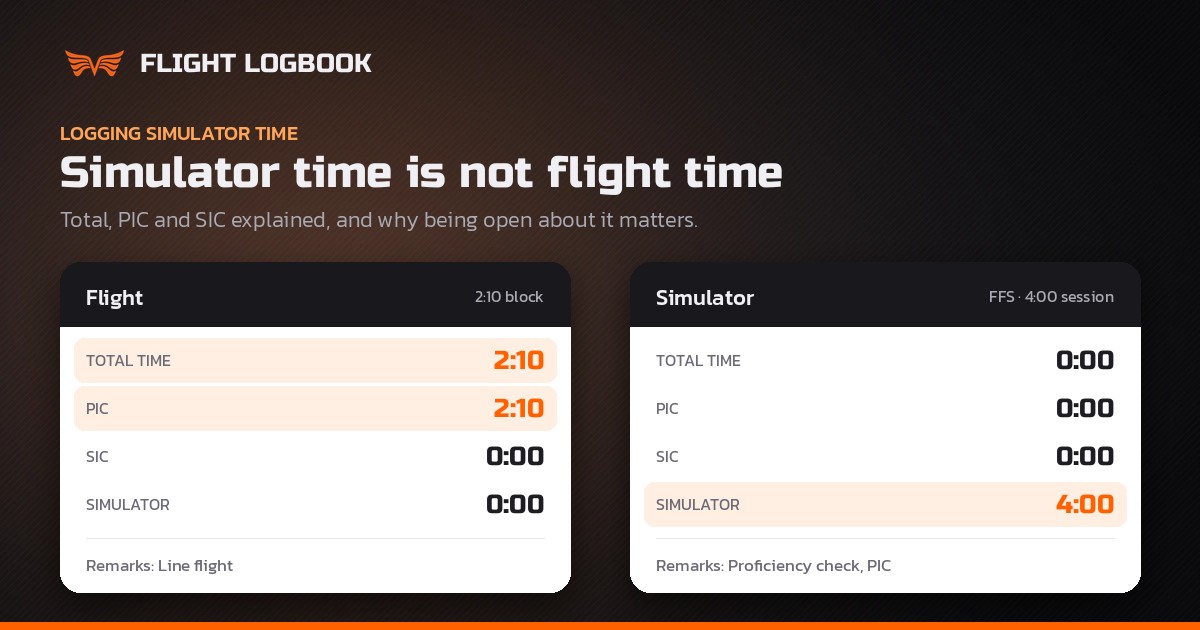
Say you complete a four-hour proficiency check in a full flight simulator, acting as pilot in command. Your logbook should show:
- Total flight time: 0:00
- PIC time: 0:00
- SIC time: 0:00
- Simulator time: 4:00
You can record that you acted as pilot in command during the session. What you can't do is add the session to your PIC or SIC flight-time totals.
EASA: the logbook format in AMC1 FCL.050 has a separate section for simulator sessions. For each session it records the date, the type and qualification number of the device, the exercise and the total time of the session.
FAA: 14 CFR §61.1 separates flight time from pilot time. Flight time requires an aircraft, while pilot time can also include qualifying training received from an authorized instructor in an approved flight simulator, flight training device or aviation training device. Not every simulator session qualifies: a proficiency check is not automatically training from an authorized instructor. Qualifying simulator training can add to your documented pilot experience without adding to your flight time. Under §61.51 you record the type of experience, such as PIC, SIC or simulator training, alongside the time.
Logged is not the same as credited
Simulator time never becomes flight time, but a limited amount can be credited towards some licence requirements. Two examples for aeroplanes:
- EASA ATPL(A), FCL.510.A: of the 1,500 hours required, up to 100 may be completed in an FFS or FNPT, and no more than 25 of those in an FNPT. These hours may be credited towards the ATPL(A) experience requirement, but they remain simulator time in the logbook.
- FAA ATP, 14 CFR §61.159: up to 100 hours in a full flight simulator or flight training device representing an aeroplane may count towards the 1,500-hour requirement. The training has to be part of an approved course under Part 121, 135, 141 or 142.
The simulator time remains recorded separately. Whether it can be credited depends on the specific licence or rating requirements. The rules differ between aeroplanes and helicopters, between licences and between authorities, so always check the ones that apply to you.
Your logbook, your responsibility
Flight Logbook gives you the flexibility to record your flying experience the way it happened. How that experience is classified, though, has to follow the regulations that apply to you.
The app calculates totals from what you enter. If you put simulator time in Total, it is included in your total time. If you put it in Simulator, it is recorded separately. When a simulator session has time in Total, PIC or SIC, the app shows a warning, both when you log it and when you create a report.
To keep your records accurate and easy to verify, we recommend:
- Log simulator sessions as "Simulator" and put the time in the Simulator field.
- Leave Total, PIC and SIC empty for simulator sessions.
- Note the details in the remarks: the exercise, your role, and the device and its qualification number, for example "Proficiency check, acting as PIC, FFS no. 1234".
This keeps your flight time separate from your simulator experience, while still keeping a complete record of your training.
Applying for a job? Be open about how you log
When you apply for a job, the recruiter compares your hours with other candidates', and expects total time to mean flight time.
- State flight time and simulator time separately in applications and CVs.
- If your total includes simulator time, for example from older records, say so, and say how much.
- Make sure your official logbook, such as the EASA PDF from Flight Logbook, matches the numbers you state.
A logbook that's easy to read and open about how it was kept builds trust. Hours that turn out to be counted differently than stated do the opposite, however good the explanation.
This article is general guidance, not legal advice. Always follow the regulations that apply to you, and any additional requirements set by your competent authority or your operator.